Understanding Chocolate Bloom: Causes, Prevention and Fixes
When chocolate loses its glossy finish and develops a whitish surface, it may look unappealing, but it is still safe to eat. This surface change is known as chocolate bloom, and it affects both the appearance and texture of chocolate. Here is why it happens and how to prevent it.
What is Chocolate Bloom?
Chocolate bloom occurs when fat or sugar crystals move to the surface of the chocolate. There are two types of bloom:
Fat Bloom
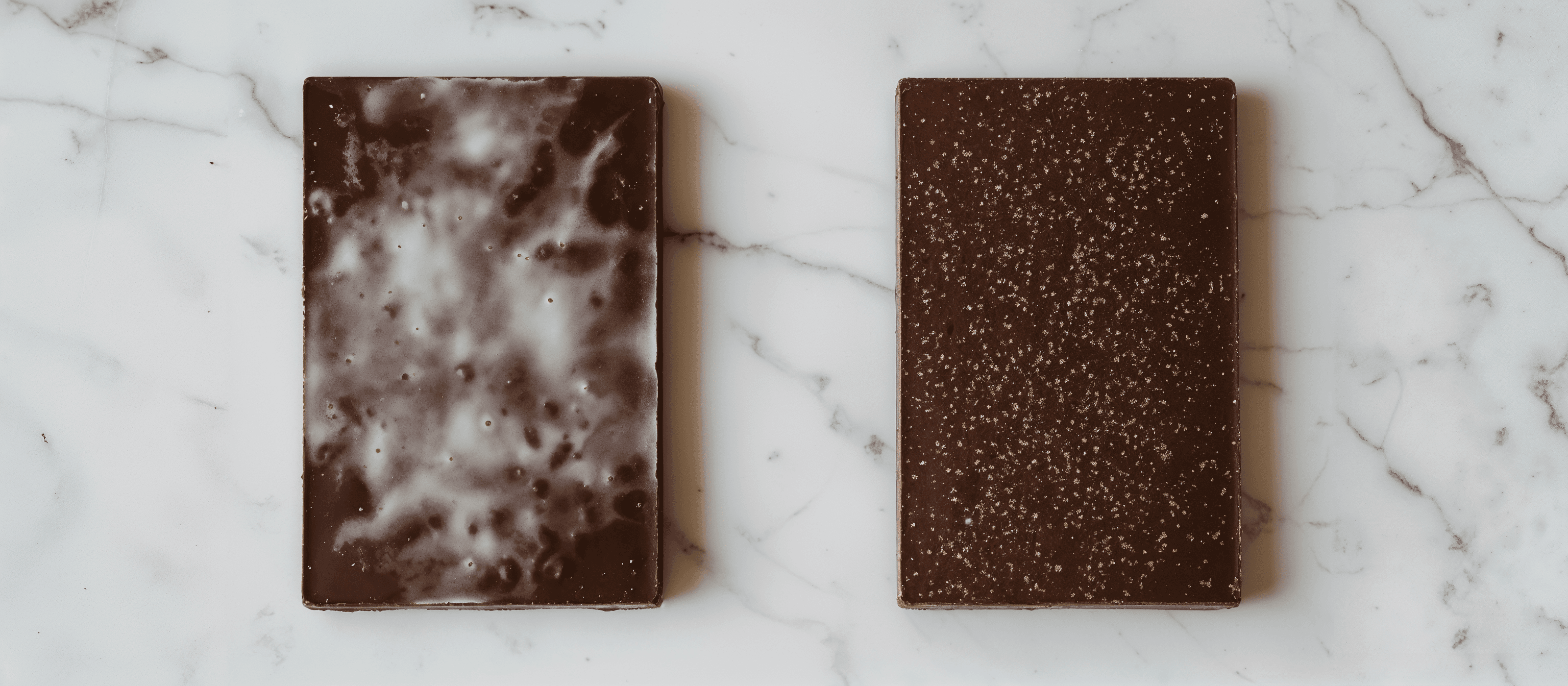
Fat bloom appears as a soft, streaky, or cloudy white layer. It is caused by unstable cocoa butter crystals from improper tempering or exposure to warm temperatures that cause chocolate to soften and re-harden. This can lead to a chalky texture and a loss of shine.
Sugar Bloom
Sugar bloom has a rough or grainy texture. It is caused by moisture or humidity. When condensation forms on chocolate, the moisture dissolves the sugar on the surface. Once the moisture evaporates, sugar crystals are left behind, making the surface feel gritty.
Key Differences
Fat bloom is caused by heat and unstable cocoa butter. Sugar bloom is caused by moisture. Both types are safe to eat, but sugar bloom causes a more noticeable texture change. Fat bloom can often be fixed by re-tempering the chocolate. Sugar bloom usually cannot be fully reversed.
How to Prevent Chocolate Bloom
Store chocolate in a cool, dry place at a consistent temperature between 15 and 21 degrees Celsius (60 to 70 degrees Fahrenheit). Keep it tightly wrapped and away from sunlight, heat sources, and humidity. Avoid rapid temperature changes, especially moving chocolate from cold to warm environments too quickly. If you need to refrigerate chocolate, keep it wrapped while it warms to room temperature before unwrapping it.
Can Bloomed Chocolate Be Fixed?
Fat bloom can be corrected by melting and properly re-tempering the chocolate to stabilize the cocoa butter crystals. Chocolate with sugar bloom can still be used for baking, sauces, ganache, or other melted applications even if the texture is not ideal for direct consumption.
Chef Ceber Quality Note
Maintaining proper storage and handling conditions is important to preserve chocolate’s visual quality and texture, especially in professional environments.
Tips for Preventing Chocolate Bloom
- Store chocolate at a consistent temperature of 15–21°C (60–70°F) to prevent fat bloom from heat exposure.
- Keep chocolate tightly wrapped to protect it from moisture and humidity, which cause sugar bloom.
- Avoid sudden temperature changes; allow refrigerated chocolate to reach room temperature while wrapped to prevent condensation.
- Use airtight containers for storage to shield chocolate from environmental factors like sunlight and heat sources.
- For professional settings, monitor storage conditions closely to maintain chocolate’s shine and texture.
Frequently Asked Questions
Is bloomed chocolate safe to eat?
Yes. Both fat bloom and sugar bloom are harmless. The issue is purely visual and textural.
Does chocolate bloom mean the chocolate has expired?
No. Bloom is not a sign of spoilage. Check the best-before date separately.
Can I prevent bloom by refrigerating chocolate?
Refrigeration can cause sugar bloom if done incorrectly. Only refrigerate when necessary and always keep chocolate wrapped while returning to room temperature.
Why does chocolate turn white when melted and hardened again?
Improper tempering or heating chocolate too high creates unstable cocoa butter crystals that cause fat bloom.
Can I still use bloomed chocolate for baking?
Yes. Bloom does not affect taste when melted, so it is perfectly fine for recipes.