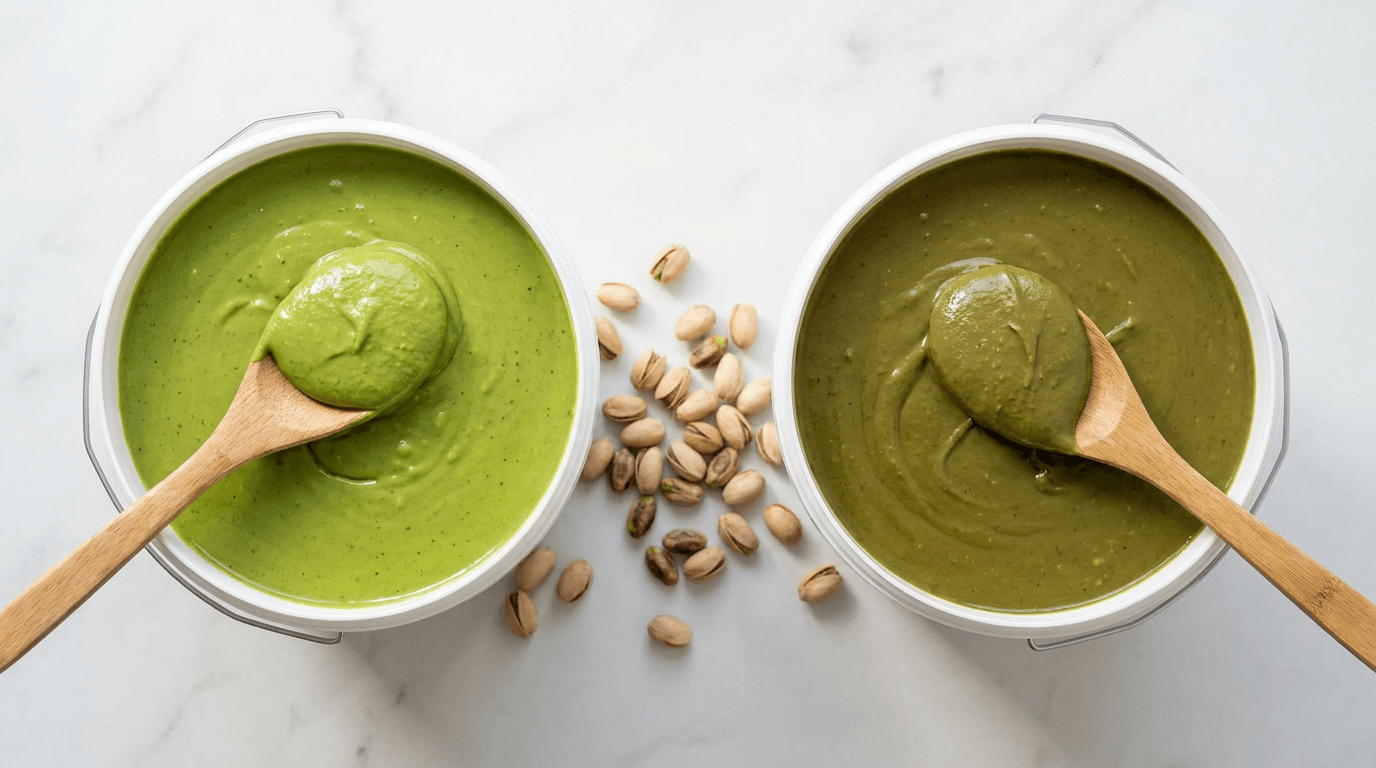
A pastry chef opened two buckets of our Barlo Premium Pistachio Cream 30% last week and called us because they looked completely different. One was a bright, almost fluorescent green. The other was deeper, more muted, leaning toward olive. Same product, same SKU, same recipe.
We get this question a lot, and the answer is good news, not bad. The color difference is a sign you are using real pistachio cream.
Pistachios are not all the same color
Pistachios grow on trees. Like any agricultural product, the color of the nut varies depending on the variety, the growing region, the harvest year, the rainfall, and even the time of year the nuts were processed. Iranian and Turkish pistachios tend toward deep green. Sicilian pistachios run brighter. Even nuts from the same orchard look slightly different from one harvest to the next.
Our Barlo Pistachio Cream is made with 30 percent real pistachio content, which is high. That means the natural color of the nut shows through directly in the final cream. There is no green dye covering the variation. What you see in the bucket is what came from the trees.
The cheap stuff is always the same color
Lower-quality pistachio creams use small amounts of pistachio (sometimes under 5 percent) and add green food coloring to make every batch look identical. That uniform color is consistent, but it is also fake. The flavor of those creams is thin, and the aftertaste is dull.
Real pistachio cream cannot look identical batch after batch. The variation is the proof of quality.
Does the color affect the flavor?
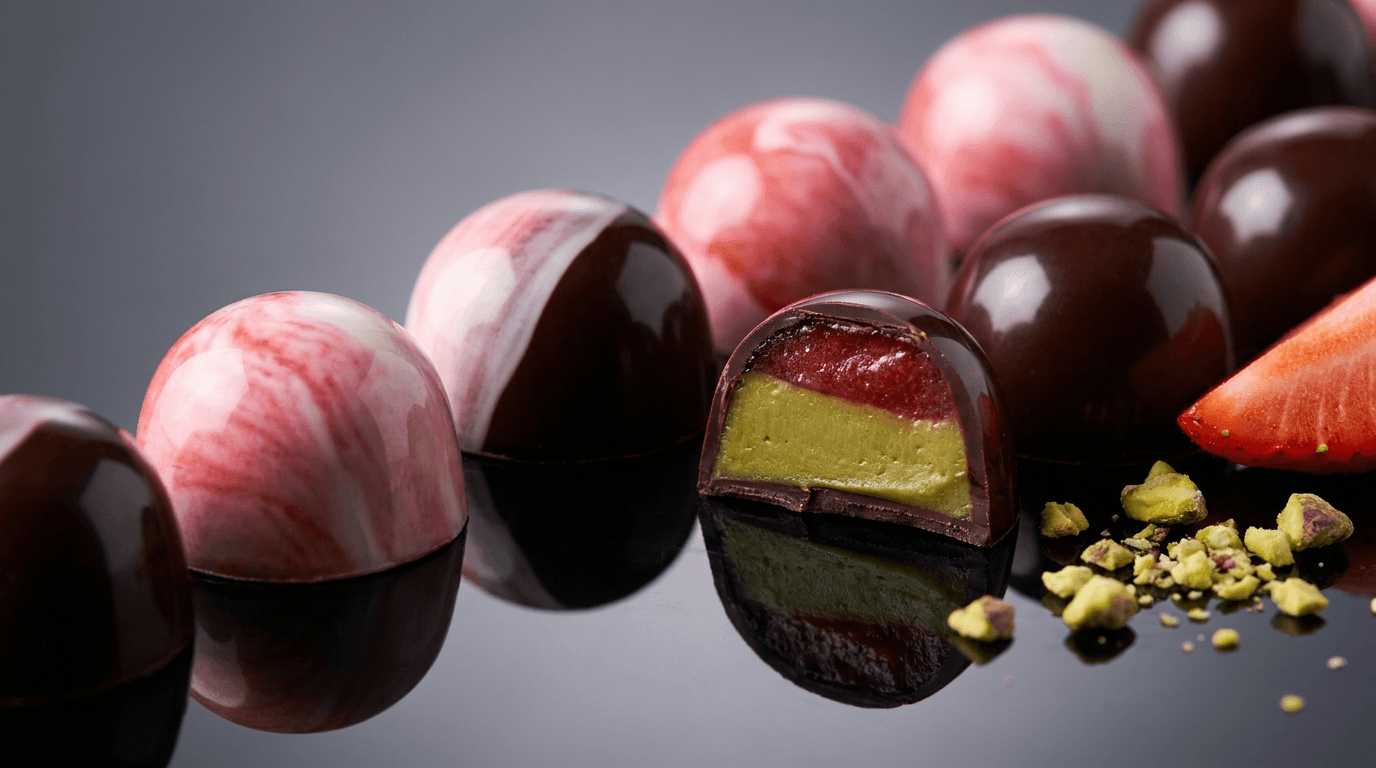
Slightly, but not in the way you might think. A deeper green often means a more mature, intensely flavored pistachio. A brighter green can come from younger nuts or a fresher harvest. Both taste great. Both work in gelato, croissants, bonbons, and entremets.
If a customer asks why their last order looked different, this is the explanation to give them. We have even seen chefs request specific shades, knowing that bright green will pop more in a clear glass dessert, while deeper green looks richer when paired with dark chocolate.
What is not normal
Genuine spoilage looks very different. If your cream has turned brown or grey, smells sour or rancid, or has visible mold on the surface, that is a problem. Send us a photo and the batch number from the label, and we will replace the bucket.
A slight oil layer on top is also normal (we have a separate post on that), but a color shift toward brown is not.
A note on storage and color
Light exposure can dull the color over time. If you store opened bucket in a clear container near a window, the green will fade a bit faster than if you keep the cream in its original sealed buckets in a dark cabinet. Storage temperature matters less for color than it does for texture.
When you scoop pistachio cream from the bucket, work clean. A contaminated spoon can introduce moisture or other flavors that affect the cream long term.
If you ever want to confirm you have a real batch from us, check the batch code on the lid and send it our way. We can tell you the harvest, the origin, and the processing date in under an hour.